
Results
-
 £22.41
All Tuned Up - 120 Famous Tunes for All Occasions (Full Score - US Size) PDFs
This unique new resource from BrookWright Music will be an essential part of every band's library! All Tuned Up is designed to cater for ensembles for occasions throughout the year. Tunes are drawn from genres including Classical, Hymns, Folk and Patriotic amongst many others to form a comprehensive book that will cover a wide variety of events such as Weddings, Funerals, Graduation Ceremonies, Parties, Proms, Remembrance, Street Playing and Thanksgiving. Playable by as few as five players but also designed to work for full brass band or wind band, it features flexible parts in a wide variety of transpositions. These excellent arrangements have been expertly created by Andrew Wainwright, David E. Jones, Dean H. Jones and Steven Ponsford. The general harmonic format of All Tuned Up is in five parts, although additional notes have been included to thicken the harmony where more players are available. Therefore, the book will work equally well with larger groups, including full brass bands and wind bands. To view a promotional video please visit www.youtube.com/watch?v=nmodRrXQRRs At the end of the Part 1 Bb book are four a capela tunes for Remembrance/Memorial occasions. This PDF download is US Letter Size - 11" x 8.5" Physical copies of the books available from: UK - Individual Books Full Set Brass Band Set USA - www.solidbrassmusic.com/product/all-tuned-up-ensemble-books
In Stock: Estimated dispatch 1-3 working days
-
£22.41
All Tuned Up - 120 Famous Tunes for All Occasions (Full Score A4 Size) PDFs
This unique new resource from BrookWright Music will be an essential part of every band's library! All Tuned Up is designed to cater for ensembles for occasions throughout the year. Tunes are drawn from genres including Classical, Hymns, Folk and Patriotic amongst many others to form a comprehensive book that will cover a wide variety of events such as Weddings, Funerals, Graduation Ceremonies, Parties, Proms, Remembrance, Street Playing and Thanksgiving. Playable by as few as five players but also designed to work for full brass band or wind band, it features flexible parts in a wide variety of transpositions. These excellent arrangements have been expertly created by Andrew Wainwright, David E. Jones, Dean H. Jones and Steven Ponsford. The general harmonic format of All Tuned Up is in five parts, although additional notes have been included to thicken the harmony where more players are available. Therefore, the book will work equally well with larger groups, including full brass bands and wind bands. To view a promotional video please visit www.youtube.com/watch?v=nmodRrXQRRs At the end of the Part 1 Bb book are four a capela tunes for Remembrance/Memorial occasions. This PDF download is International Size - A4 (297mm x 210mm) Physical copies of the books available from: UK - Individual Books Full Set Brass Band Set USA - www.solidbrassmusic.com/product/all-tuned-up-ensemble-books
In Stock: Estimated dispatch 1-3 working days
-
 £18.00
Es ist ein Ros Entsprungen
DescriptionEs ist ein Ros Entsprungen is sometimes sung to the English words "A Great and Mighty Wonder". This tune to the reformation era German carol first appeared in the Speyer Hymnal in Cologne in 1599. This harmonisation of the tune by Michael Praetorius in 1609, one of his earliest publications. Praetorius was, along with his slightly younger contemporary Heinrich Schutz, the foremost German composer of the day, and became famous for his choral music. Much of this was written for multiple groups positioned around the church and conducted by a central conductor, giving a multi-phonic effect similar to the Venetian music of Gabrieli. Today his most famous music is Terpsichore, a collection of over 300 secular dances.You can follow the preview video of the score below.PercussionPercussion required are timpani and clash cymbals only; if clash cymbals are not available this part should be omitted (rather than played on a suspended cymbal).Mutes2 x solo cornets, second cornets and all trombones will require cup mutes
Estimated dispatch 7-14 working days
-
 £12.00
Canzonetta
DescriptionCanzonetta is a tenor horn solo with optional brass band or piano accompaniment.Canzonetta was one of my earliest compositions, written in my early days as an undergraduate. Along with a companion piece called Caprice it was written for an old friend, Louise Hunt (now Louise Skillander), to whom it is dedicated. We had both been in the Northop Youth Band together, and both pieces were the result of a conversation about the lack of 'good tenor horn solos' for lower section and youth players at the time.With more mature consideration the Caprice has been consigned to the dustbin of history, but the simplicity of Canzonetta has allowed it to stand the test of time with a few minor scoring revisions.Performance Notes:Percussion instruments required are 2 x timpani, glockenspiel, suspended cymbal, concert bass drum (NOT a kit/pedal bass drum) and tam-tam. All cornets will require cup mutes.Duration approximately 3'40"You can follow the score while listening to an audio preview below:
Estimated dispatch 7-14 working days
-
Left Bank Two - Wayne Hill - Len Jenkins
In the 1960's, a group of session musicians had some studio time left over and asked if anyone had something they wanted to try. The young vibes player, Wayne Hill came up with this tune, which they recorded on the spot, almost as a 'throwaway' piece. To viewers in the UK, it is best known as the music used in "The Gallery" sequence of 'Vision On', which was a British children's television programme, shown on BBC1 from 1964 to 1976. Tony Hart, artist and co-presenter of the programme, made pictures in a variety of sizes and media, and encouraged children to submit their own paintings to "The Gallery" for display on TV. They did so in their thousands. The piece has been used in a number of adverts including those for Volkswagen, Castrol Oil and Waitrose, and TV programmes such as NBC's America's Got Talent, The X Factor (U.S) and the BBC panel show QI. Left Bank Two features a Vibraphone solo with Brass Band accompaniment. For those bands that do not have a Vibraphone, an alternative solo for a B flat instrument is included.
-
 £40.00
JOCK MCKENZIE MINI CHRISTMAS COLLECTION Concert Band Value Set - McKenzie, Ian
Score and 29 parts (Part 1: 4 x Bb, 1 x Eb, 3 x C (flute), 1 x C (oboe); Part 2: 4 x Bb, 1 x Eb, 1 x F, 1 x C; Part 3: 1 x Eb, 1 x F, 1 x Bb TC (3rd clarinet), 1 x Bb TC, 1 x C BC; Part 4: 1 x Bb TC, 1 x Eb TC (baritone sax) 1 x C BC; Part 5: 1 x Eb, 1 x Bb, 1 x C BC; 1 x Kit Percussion, 1 x Auxillary Percussion). Contains: Let the Rock Roll Out for Christmas; Season's Greetings!; Glory Shone Around; Oh Yes It's Christmas!.
Estimated dispatch 7-14 working days
-
 £99.95
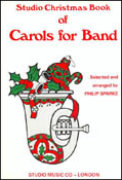
Carols for Band (Brass Band Set) - Sparke, Philip
Designed to be playable by any combination from quartet to full brass band, wind band or orchestra, the arrangements in this book with provide a practical solution to all your carolling needs. Parts are divided into Soprano, Alto, Tenor and Bass so that any suitable instrumentation will sound well, providing an equal balance of players per voice is maintained. The carols are printed in alphabetical order so they are easy to find, and comprehensively indexed under both first line and name of tune.Score, Timpani and Percussion parts are available separately.Instrumentation is as follows: Brass BandWind BandStringsSopranoEb Soprano CornetSolo Bb CornetBb Repiano & Flugel1st Flute & Piccolo2nd FluteOboe1st Bb Clarinet1st Bb Trumpet/Cornet1st ViolinAlto2nd & 3rd Bb CornetSolo Eb Horn1st Bb Trombone2nd & 3rd Bb ClarinetsEb Alto Saxophone2nd Bb Trumpet/Cornet1st F Horn2nd ViolinTenor1st & 2nd Eb Horns1st & 2nd Bb Baritones2nd Bb Trombone1st Bb EuphoniumEb Alto ClarinetBb Tenor Saxophone2nd F Horn1st & 2nd TrombonesViolaBassBass Trombone2nd Bb EuphoniumEb BassBb BassBassoonBb Bass ClarinetEb Baritone SaxophoneBass TromboneEuphoniumTubaCello/BassTitles included:Angels from the Realms of GloryAs with Gladness Men of OldAway in a MangerBrightest and BestChristians AwakeCoventry CarolDeck the HallsDing Dong, Merrily on HighFirst NowellGod Rest ye Merry, GentlemenGood King WenceslasHark the Glad SoundHark, the Herald Angels SingHolly and the IvyI Saw Three ShipsIn Dulci JubiloIn the Bleak Mid-WinterInfant HolyInfant KingIt Came Upon a Midnight ClearJingle BellsLo, He Comes with Clouds DescendingLove Came Down at ChristmasO Come, All ye FaithfulO Come, O Come, EmmanuelO Little Town of BethlehemOf the Father's Love BegottenOnce in Royal David's CitySans Day CarolSee Amid the Winter's SnowSilent NightSussex CarolThou Didst Leave Thy ThroneUnto Us is Born a SonWe Wish You a Merry ChristmasWhile Shepherds WatchedThe Brass Band Set consists of 25 Parts:1 x Eb Soprano Cornet4 x Solo Bb Cornet2 x Bb Repiano & Flugel4 x 2nd & 3rd Bb Cornet1 x Solo Eb Horn2 x 1st & 2nd Eb Horn2 x 1st & 2nd Bb Baritone1 x 1st Bb Trombone1 x 2nd Bb Trombone1 x Bass Trombone1 x 1st Bb Euphonium1 x 2nd Bb Euphonium2 x Eb Bass2 x Bb Bass
Estimated dispatch 7-14 working days